Large-scale software and IT projects are completed on-budget about 60% of the time, which is good news. But the cost overruns in the other 40% are another story.
Bent Flyvbjerg, author of How Big Things Get Done, found that IT projects that do go over budget have the largest relative cost overruns of any project type measured, including nuclear power plants, hydroelectric dams and the Olympics.
Why IT overruns hit harder than you might expect
Many construction contractors are used to extreme cost overruns, but even these pale in comparison with the overruns on IT projects. While they may be less frequent , extreme IT overruns can average 2.75x those on highway projects, and 1.9x those on building projects.
“At the time of the final investment decision, the actual cost of an IT project is more unpredictable and involves more extreme risk than for any other project type, including the disposal and storage of nuclear waste,” notes Flyvbjerg. “This is all the more astonishing, given the fact that IT projects have a much shorter duration on average than other project types, and shorter duration supposedly means lower risk, other things being equal.”
These cost blowouts can be devastating for a business. Kmart declared bankruptcy after a failed IT system implementation, and many CEOs have lost their jobs due to spiralling costs.
Fortunately, Flyvbjerg says there’s a simple solution for landing in the 60% that finish on budget, and it’s one that will be familiar to construction companies: modularity and planning.
Building software like an assembly line
Construction professionals understand that treating the building of an individual turbine in a wind farm as a one-off project will perform worse than treating the whole farm as an assembly line where manufactured parts are brought on-site only when needed and quickly assembled. That same modular approach can also be applied to software.
In the paper The Uniqueness of IT Cost Risk, published by the Project Management Institute, Flyvbjerg and his team present the Apple App Store as a perfect example of modular software.
Integrating software with hardware has historically been incredibly challenging. If you wanted your app to use a phone’s camera, you would need to write code to handle every different version of the phone. To do that, you’d need to understand how each version of the camera receives commands to take a photo or change the shutter speed.
Apple abstracts all this complexity away with its Software Development Kits. Using these, you can integrate the camera, GPS, Siri, Bluetooth, notifications and more into your app with just a few lines of code each.
This de-risking of the app-building process is likely the reason it has been so successful for Apple. The modularity of the apps allows Apple’s security team to review and approve apps on an industrial scale: today there are more than 2.4 million apps available for download.
How Palantir Foundry brings modularity to enterprise software
Building enterprise software used to require multiple teams across the full software development lifecycle: subject matter experts, product designers and managers, front-end developers, back-end developers, cloud infrastructure specialists, and security experts. With Palantir Foundry, all this can now be done by the subject matter experts with the right expert development support.
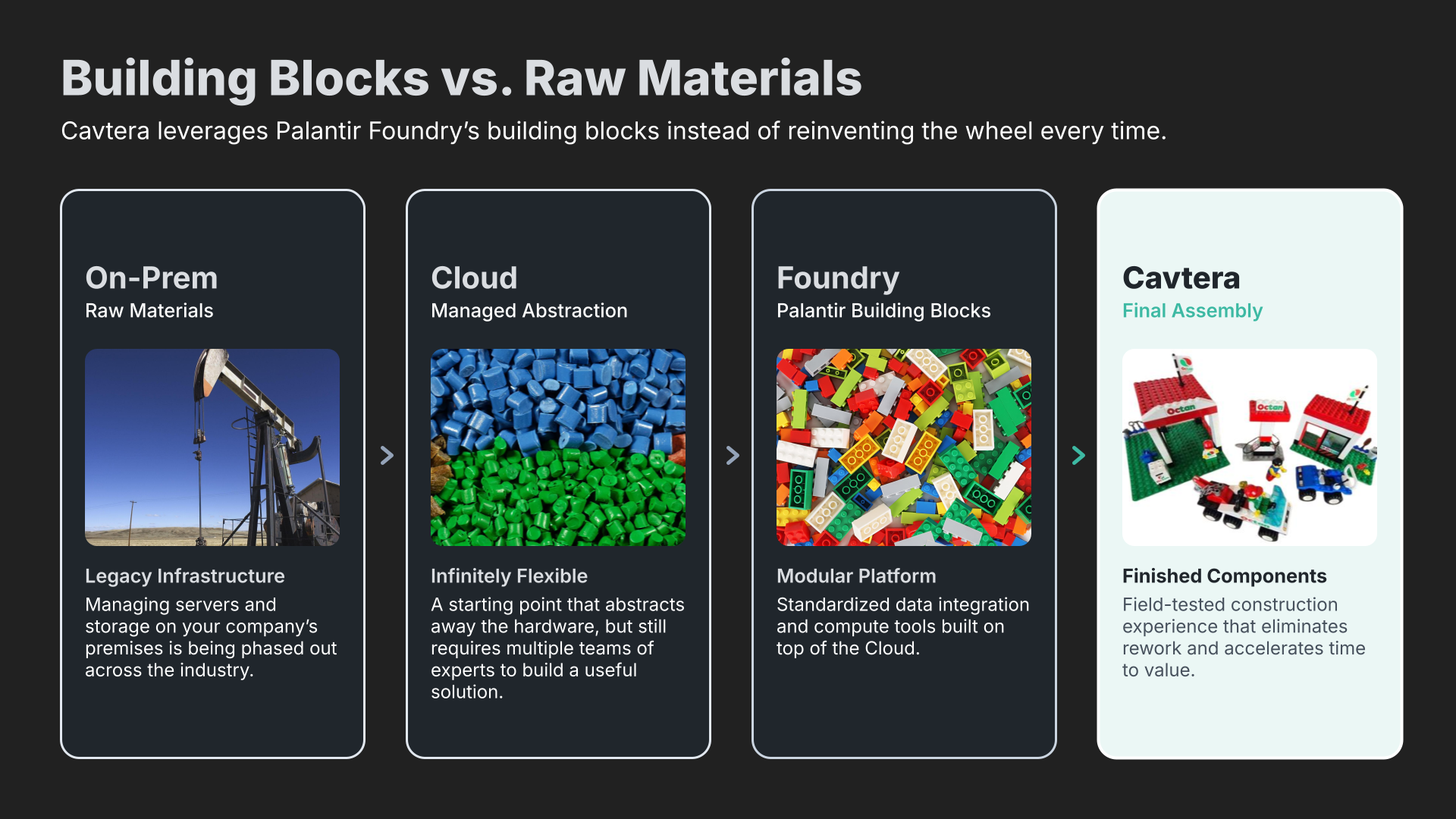
Foundry achieves this by adopting a strategy that works in a similar way to the Apple ecosystem. Much like Apple’s Software Development Kits, Palantir provides repeatable building blocks organizations can use to build custom software that is perfectly suited to their operations, without having to start from scratch. This allows teams to focus on implementing business logic and building user interfaces instead of on all the complex details of software development.
Planning without the wait
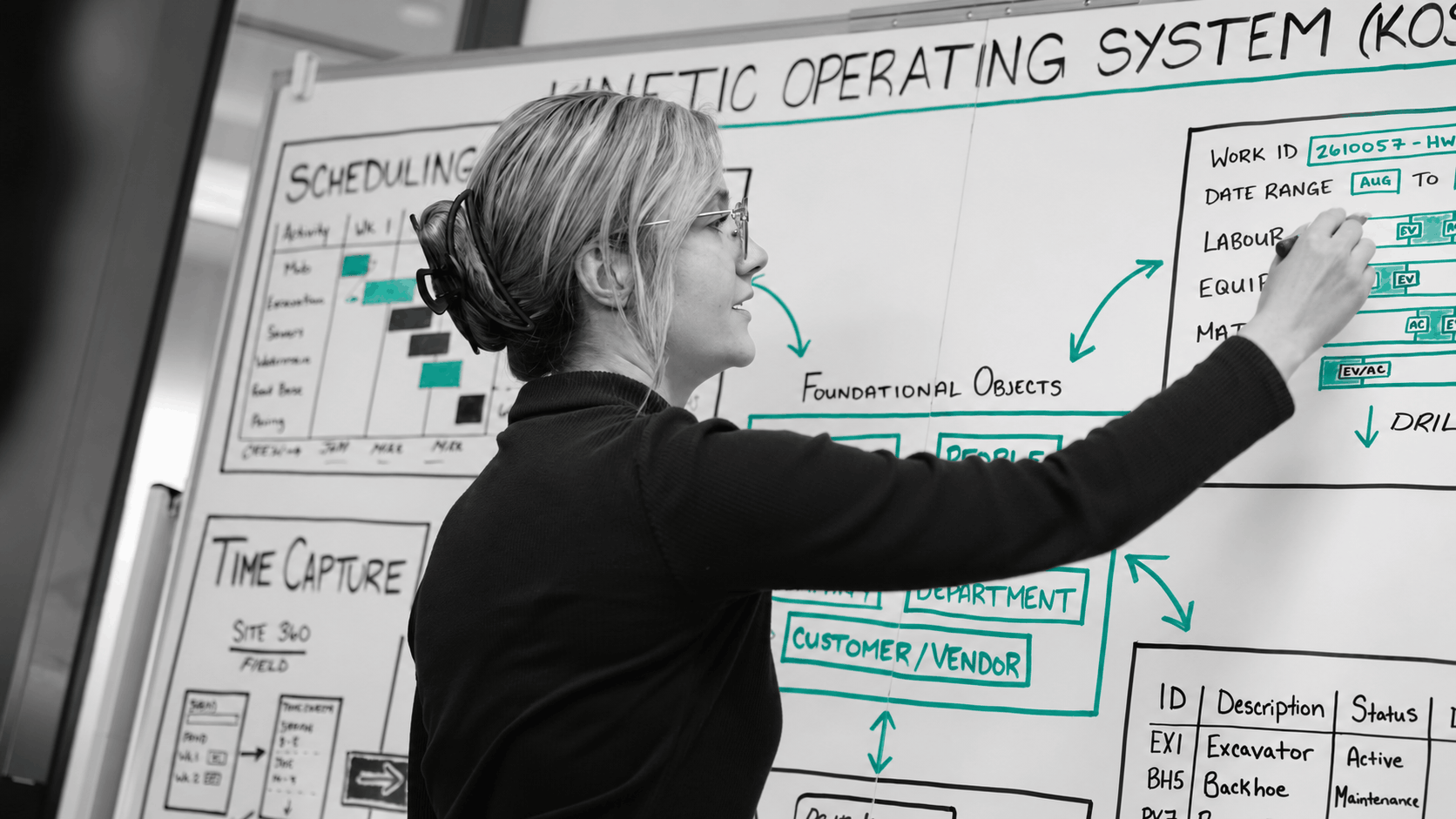
Cavtera takes this modularity a step further, emphasizing the second critical part: detailed planning.
One reason software and IT projects carry higher risk is that mid-project changes are often perceived as quick and cheap compared to traditional construction. This perception can tempt teams to rush (or skip) the planning phase and just jump right into development. However, Nobel laureate Daniel Kahneman has demonstrated that this kind of “fast thinking” results in flawed decision-making and dramatically higher exposure to risk.
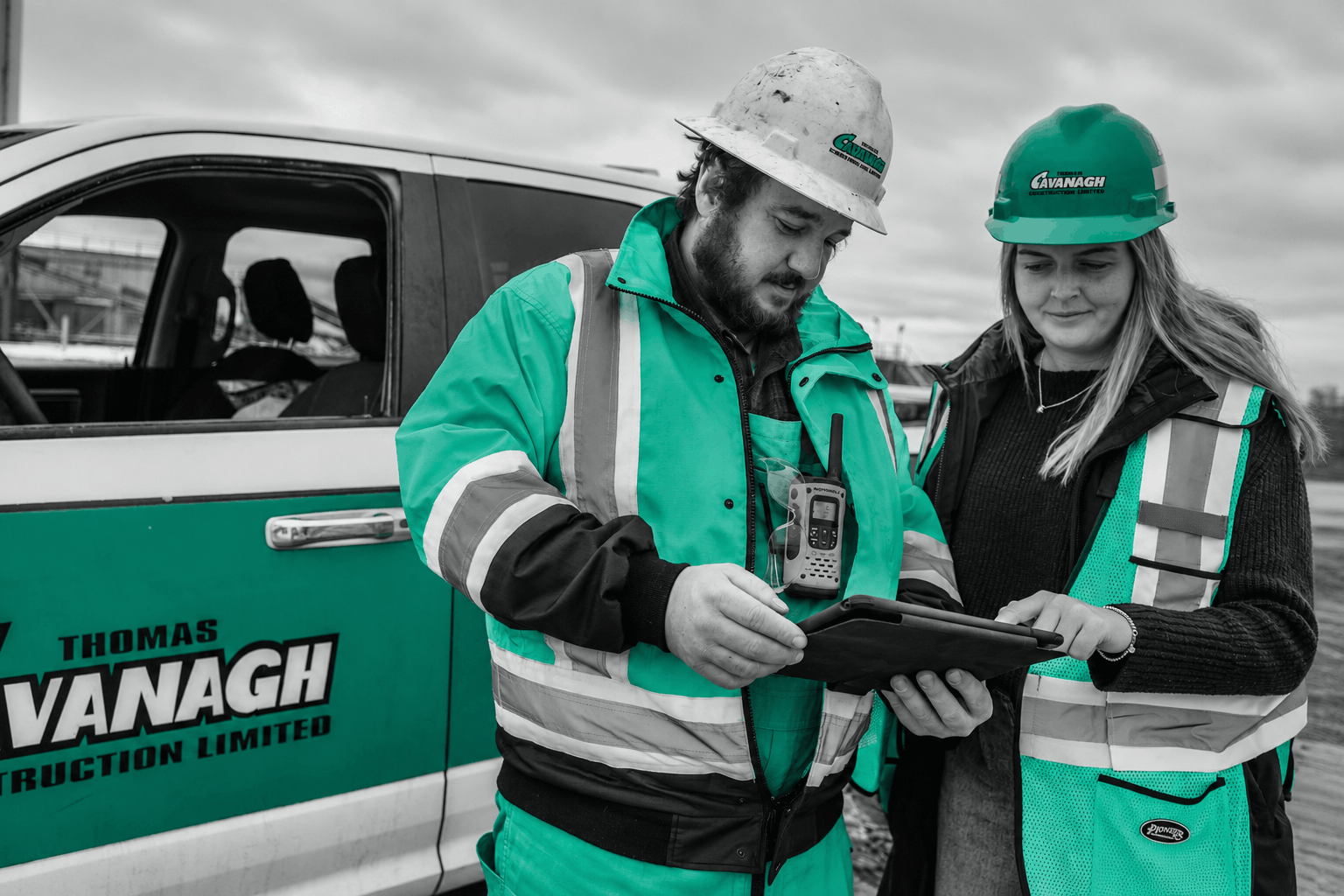
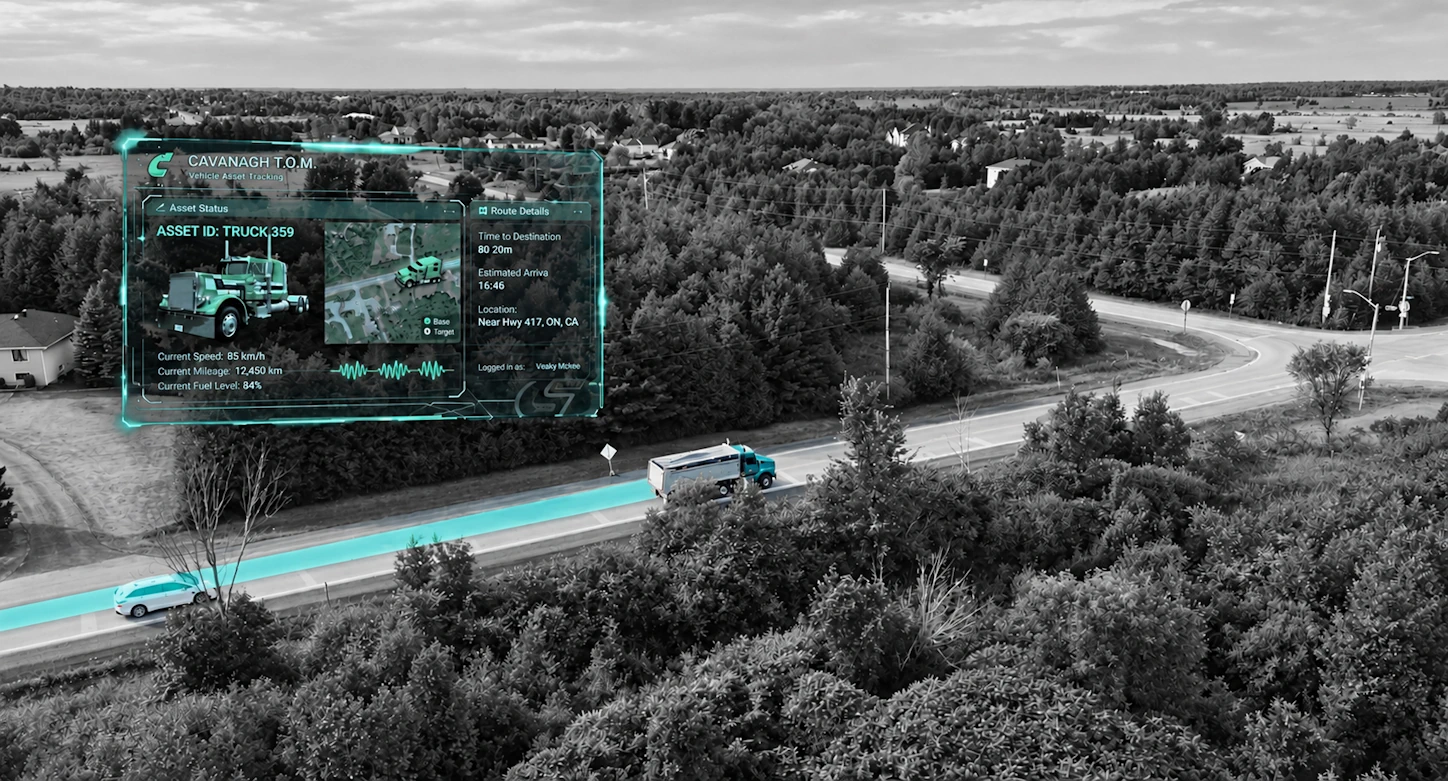
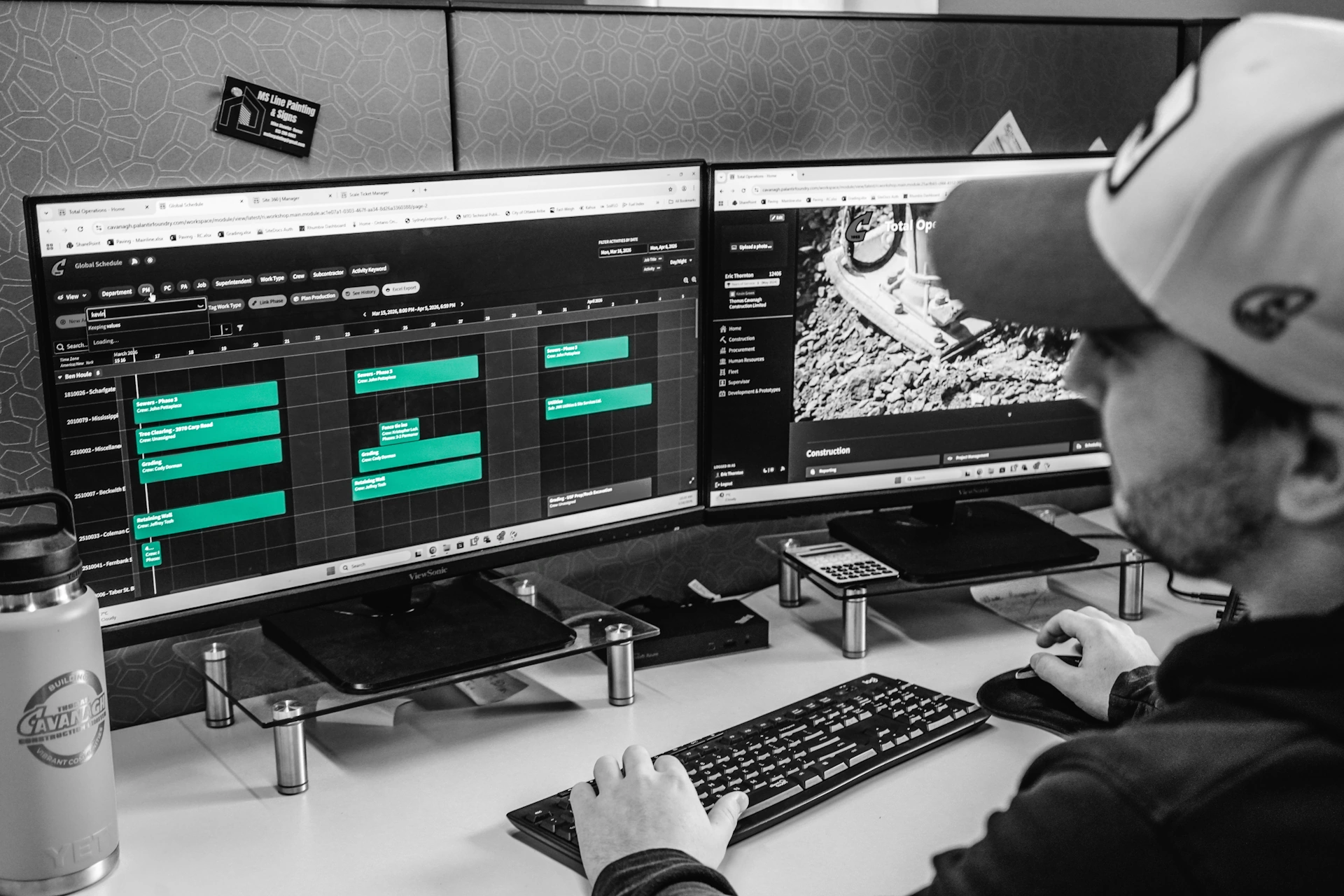
Cavtera can help construction companies avoid that headlong rush while still getting things started quickly, because we’ve already gone through the process of redefining how a construction company operates using custom software. When we started working with Thomas Cavanagh Construction Ltd., they were using paper timecards and a stack of other off-the-shelf software products. Within just 18 months, they had shifted almost all their processes into tools built on Palantir Foundry.
We’ve done the groundwork
The experience and institutional knowledge we’ve built up by actually doing the work enables us to deliver a detailed planning process in less time. We know how to build a full operating system for a construction company, including how to collaborate with stakeholders — and what not to do. We’ve spent more time thinking about this than almost anyone else, so even though we don’t start building on day one, we don’t start from zero either.
You wouldn’t pour a foundation without a plan. Your software deserves the same discipline. With proven building blocks and a planning process shaped by real construction experience, your next IT project can land in the 60% that finish on budget. If you’re weighing a new system or a move to Palantir Foundry, talk to our team about where to start.