The world of construction technology is changing faster than ever before, with every new tool bringing new vocabulary. We’re all becoming comfortable with terms like “generative AI” and “large language model” as we interact with chatbots, but some terms are still pretty abstract.
“Ontology” is one of those terms. You might have seen ontology mentioned in reference to software platforms or AI solutions. But what is it? Why is it useful? How do you build one? That’s what we’ll explain in this article.
What is an ontology?
To use an analogy that you might already have some experience with, think of a building information model (BIM) or digital twin.
In BIM, every element in a building is represented digitally as part of a 3D model: doors, windows, walls, toilets, HVAC units, etc. Each element has a size, shape, location and other specs, like manufacturer information. You can also attach more details, like installation status. The underlying rules of BIM that describe how each of those elements should be modelled are an ontology.
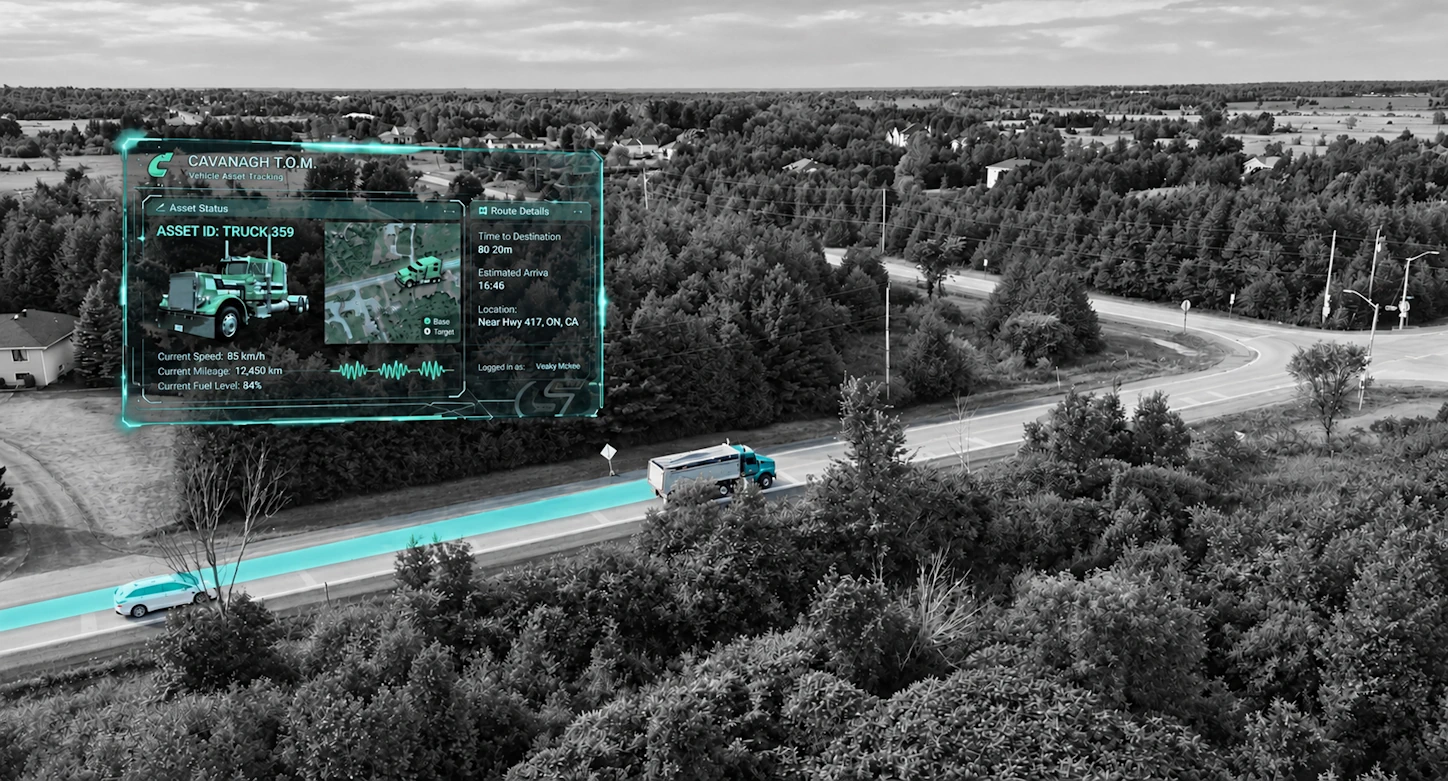
In a business ontology, the elements of your company (i.e., people, materials, equipment and contracts) are modelled in the same way. For example, an ontology can record the size, manufacturer and location of each excavator you own. It can also record maintenance history, charge-out rate and other details.
A foundation for practical business applications
A solid ontology can be the foundation for a solution with nearly endless possibilities for your business. But on its own, an ontology is just data. To get value from your business ontology, you need to build a user interface on top of it. This can be dashboards, mobile apps or automations that are triggered when data is updated.
By investing the time in building this “digital twin” of your business, you can create a system built specifically around your needs. This system serves as a central source of truth for all your people, material, equipment and contracts. The user interfaces you build on top of it enable you to replace many of the tools you need to manage your construction business, including tools for fleet management, timecards, procurement, scheduling and more.
By digitizing your entire business this way, you’re paving the way for genuinely practical AI enablement. This is a different approach from buying a software solution with pre-packaged AI, which typically only sees whatever’s entered into that specific tool. That significantly limits its value and applications when compared to a solution that can pull and make connections between every piece of data from every part of your business.
How do I use an ontology?
Once all the elements of your business are modelled in an ontology and you’ve built your tools, what do you do with them? Just about anything. They can be used across your whole business, by different teams and departments, for multiple purposes. Consider the excavators we talked about earlier. There’s now a single source of truth for each one. That means:
- Dispatch can assign it to a project and schedule transport
- A project manager can see how much it’s costing them
- Maintenance can track its hours to schedule inspections and servicing
- Finance can track its depreciation
- Foremen can add it to their daily reports and allocate usage
- Executives can see the overall fleet utilization
And all that happens without anyone having to re-enter the same information or manually cross-reference between separate systems.
Consider another example: contracts. Construction contracts can be spread across many documents, like specs, standards and drawings. By using AI to model these documents in an ontology, individual line items can be extracted and connected to the schedule, cross-references can be created across the documents for faster access, and obligations for quality and environmental management can be easily surfaced to the right teams at the right time.
Powering real benefits
Tools built on top of your ontology have the advantage over off-the-shelf solutions because they fit how your teams actually work, instead of forcing teams to change how they work to fit the tool. On top of that, by replacing dozens of individual point solutions, this can often save you money and reduce complexity by enabling teams to log in once and do all tasks within a single system.
Another advantage is that it doesn’t have to be a closed system. Data for your ontology can be created by a third-party system. For example, the software that runs your asphalt batch plant can feed into the materials data in your ontology. At the other end of the process, the data can also be exported to the specialized accounting software used by your finance team.
That’s why it’s vital to consider the ability to integrate with other systems when evaluating tools to build your ontology. Palantir has been integrating data across government agencies for more than 20 years and, through its Foundry platform, offers the same benefits for commercial businesses. It’s what we used to build a unified system for Thomas Cavanagh Construction, and it’s what powers every system we build for our other clients.
To summarize, an ontology is a digital representation of the people, materials, equipment and contracts that make up your construction business. From these core objects, you can build any type of software for any workflow, replacing dozens or hundreds of tools and centralizing data so your decision makers have full visibility into the business.