Construction companies run on three main resources: labour, equipment and materials. Being able to track and manage all three, across multiple teams and jobsites, is essential to planning and delivering every project. But for most companies, there’s no effective way to capture that data, get it to the people who need it or use it to make informed decisions — including how the work actually done measures up against how it was bid and planned.
In practice, that means equipment can be difficult to source because no one’s sure exactly who had it last or where it is now. Keeping projects on schedule is also challenging because there’s a disconnect between what happened on the job versus the information that comes back to the office.
Field App changes all that. Built by Cavtera on the Palantir Foundry platform, it’s configured around the way each company actually works, so the right person can capture the right information at the right time.
Good management needs good visibility
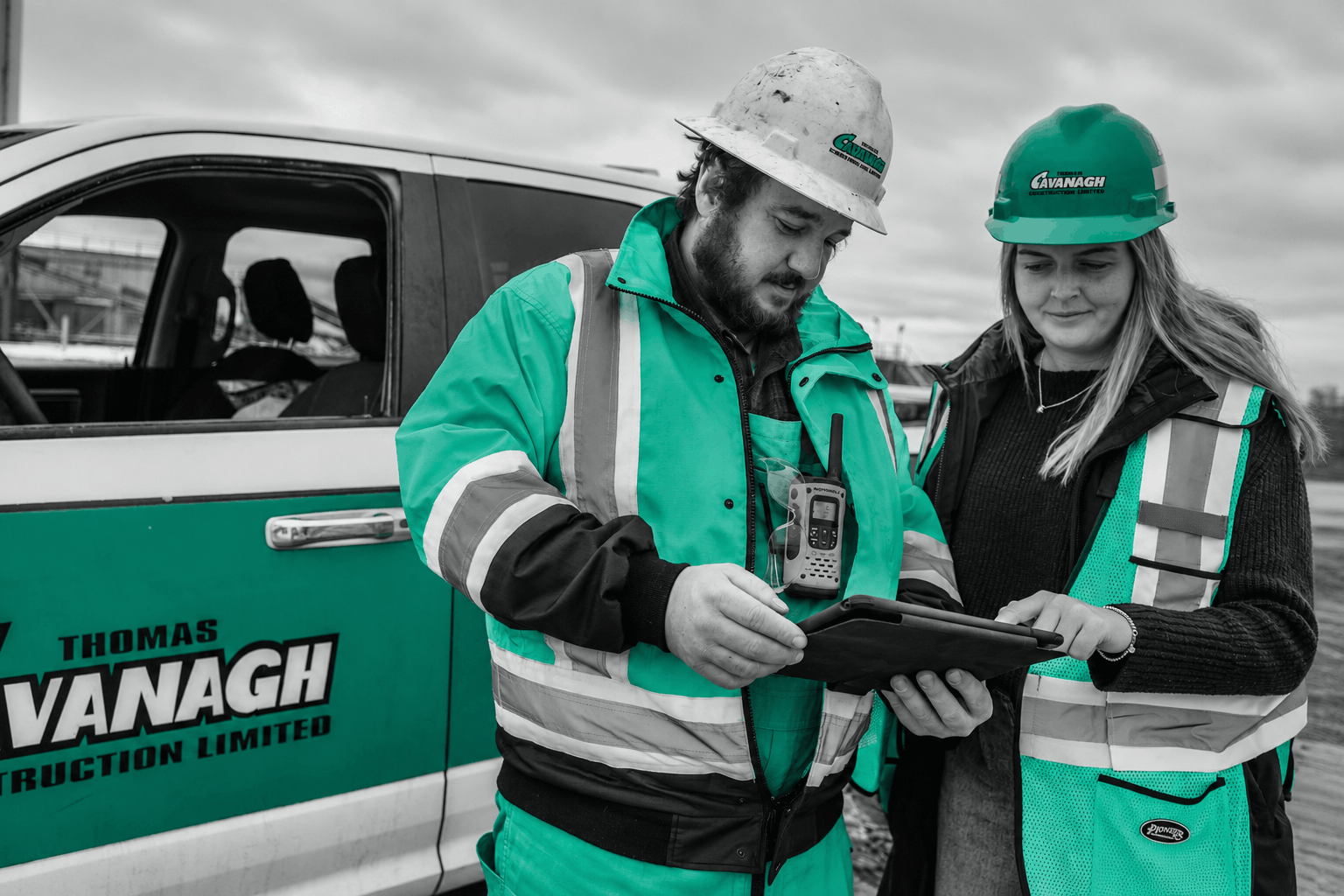
Sarah Cavanagh, an Engagement Manager with Cavtera, says the lack of good data on day-to-day operations was a major challenge for Thomas Cavanagh Construction. The company tried multiple off-the-shelf software solutions, but none of them captured exactly what needed to be tracked. Many of them were also full of features the company didn’t need, cluttering up the interface and adding extra administrative burden for foremen without delivering the benefits the company wanted.
“When we were training the foremen on these platforms, more often than not, we were telling them about the things they shouldn’t be using within the system instead of the things they should be using,” says Cavanagh.
Projects still got delivered, but the company had limited visibility into how much labour, equipment and material each one consumed. This lack of understanding of resource utilization made it difficult to plan or estimate for future work. It was also impossible to accurately assess, predict and manage the impact of external factors like weather, with no way to track how heavy rain or extreme heat affected schedules.
The challenge of knowing who has what equipment
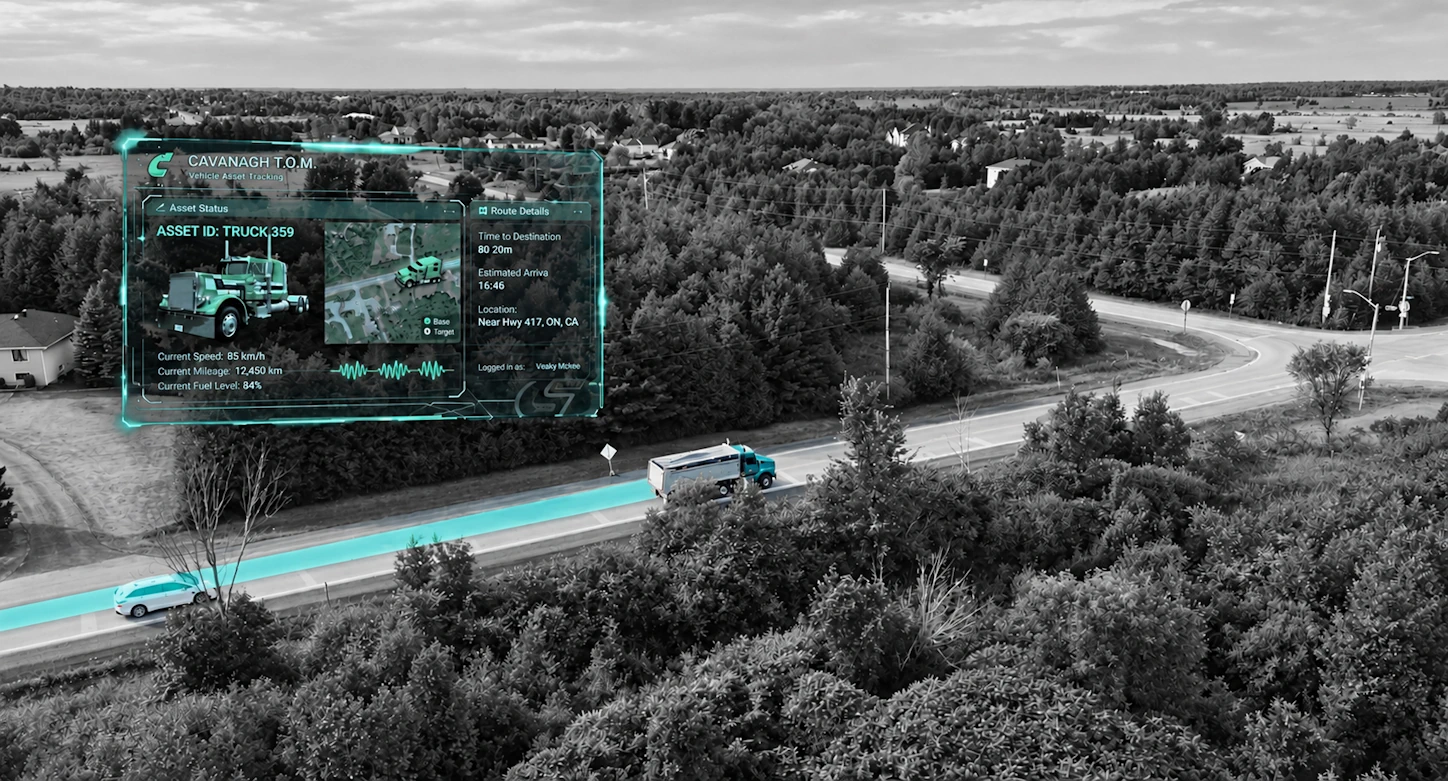
Equipment tracking was another area where the available software fell short. None of the systems the company tried could assign formal responsibility for a piece of equipment, which created several challenges:
- It was easy to lose track of any given piece, making it harder to find the right equipment when needed. A missing piece might not be noticed until the moment someone needed it for a job.
- It increased the risk that the equipment might be damaged or in need of maintenance when it was found, introducing downtime and clogging up mechanic shop floors.
- As the company continued to grow, the equipment inventory did, too. Over time, it became impossible for only one person to keep track of more than 500 pieces of yellow iron, for example.
“Previously, foremen would have no visibility into what they’re actually responsible for,” says Cavanagh. “They call their superintendent, they ask for a shovel, they get the shovel, they leave the shovel on the site and then it loses the trail. Nobody knows who’s actually responsible for it.”
It was also hard to keep track of how or even if equipment was being used. An excavator might be sitting at a site, but is anyone there actually using it? Or could it be moved to another site where it’s needed? Without that information, it was difficult to know whether the right move would be to buy another excavator or redeploy one that’s already sitting idle.
How Field App improves operational visibility
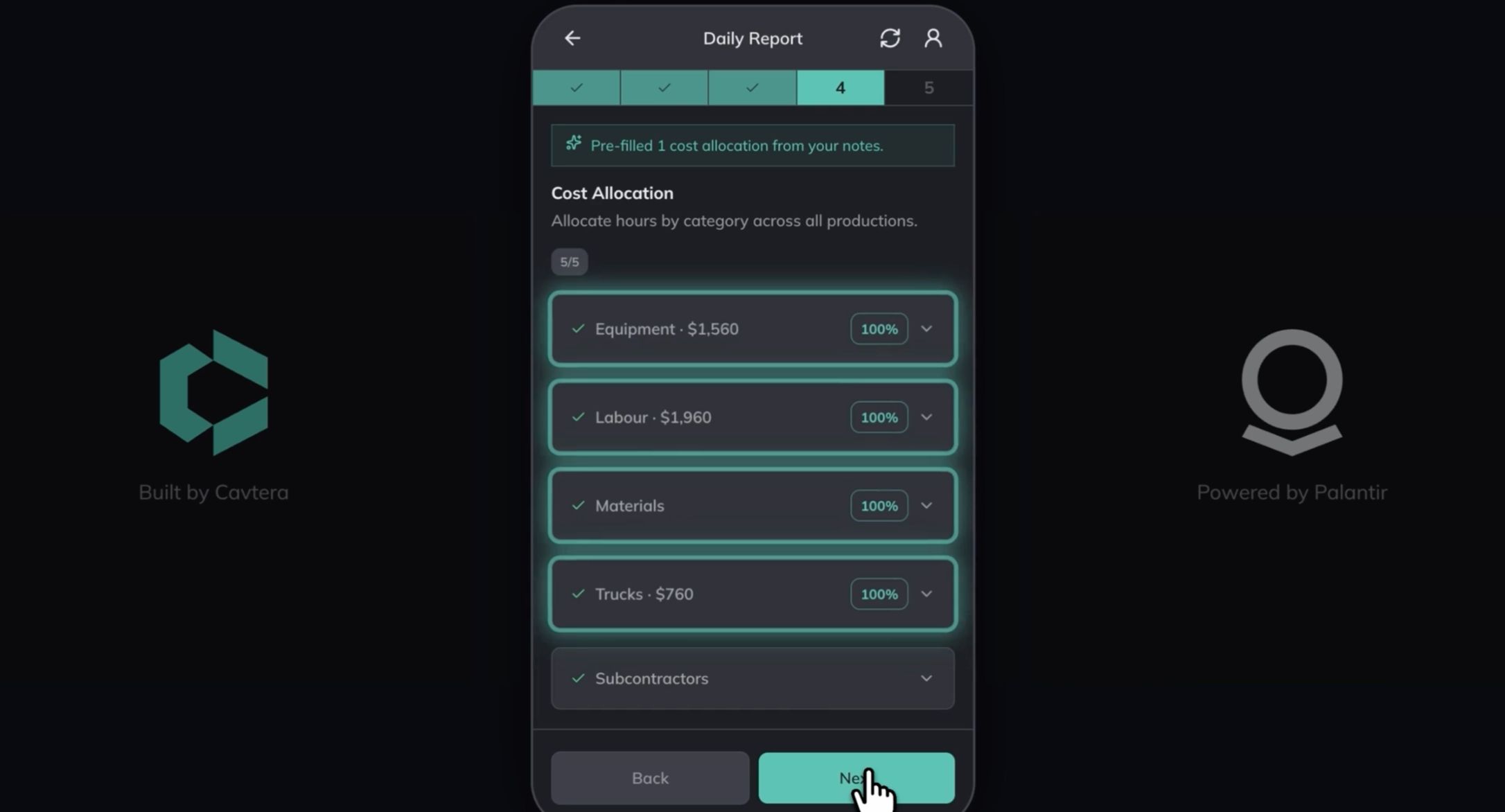
Rather than settle for an off-the-shelf solution that almost fit, Thomas Cavanagh Construction worked with Cavtera to build its own: Field App. Developed on the Palantir Foundry platform, it was designed specifically for construction with input from the foremen who actually use it. The application asks them to enter basic information, such as production values and labour/equipment usage, collecting the exact information needed — and no more. This makes it fast and easy to use, minimizing the time foremen have to spend away from the field.
Field App provides foremen with a clear view of all labour, material and equipment resources for their projects. Every piece of equipment is tracked, with responsibility clearly assigned. They can also track what work was done, what materials were used and other information about the day.
The app then generates a comprehensive daily report that’s instantly available to everyone involved in the chain. These reports, populated with data submitted by foremen across the company, enable analytics that support more informed business decisions about crew sizes and equipment allocation.
“All the way from the operations manager to the project manager, they’re able to understand exactly what happened in that day without having to do follow-up questions or administrative tasks to understand,” says Cavanagh.
The benefits of Field App for construction companies
The benefits of Field App for construction companies start in the field and extend through the whole company.
- True customization – Every company can fully customize what’s being captured in the app, meaning every entry on the form is directly relevant to how the company actually operates, with no generic defaults to work around. That keeps it fast to complete, so it fits naturally into a foreman’s day.
- Better costing and planning – A better understanding of performance and the factors that influence it enables better costing and can inform future planning and estimates. Cavanagh says that level of understanding is critical to getting the bids right that will determine whether a company wins the next job or not.
- Equipment traceability – More accurate tracking of critical equipment enables more effective allocation, reduces the risk of theft and gets repairs done faster. “With Field App, you’re actually assigning a responsible person to that piece of equipment, so they know exactly who has it, what happened to it last,” says Cavanagh. “If it was damaged or stolen, you have a full chain of events.”
- Real-time analytics – All that information feeds into real-time data analytics that enable project managers to be proactive instead of reactive, making stronger business decisions about labour hours, equipment needs and more.
Planning based on real data
Better visibility into key resources improves both jobsite performance and administrative decision-making, getting everyone on the same page to make every system run better. Cavanagh says it all comes down to planning.
“In order to execute, you need to plan what you’re going to do,” she says. “You have to have a plan for your crew and your equipment. Having all of that in one place, it becomes your central command centre.”